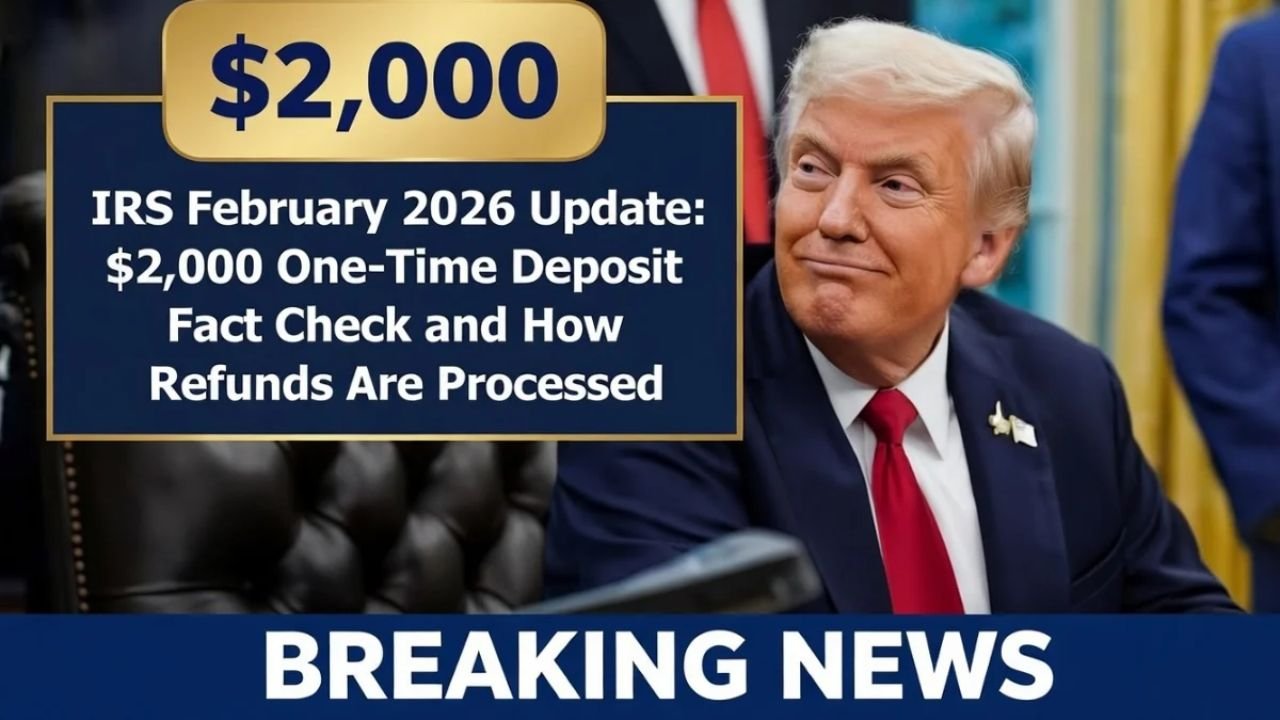
Reports of a $2,000 IRS one-time deposit for February 2026 have generated widespread attention. Many taxpayers are wondering whether a new federal payment program has been authorized, who might qualify, and when funds could arrive. Understanding the reality behind these claims is crucial before expecting any deposit.
Is There an Official $2,000 One-Time IRS Payment?
As of February 2026, there is no confirmed nationwide $2,000 stimulus or relief payment scheduled by the IRS. The agency only distributes one-time payments when legislation is passed and authorized by Congress.

Most references to a $2,000 payment are related to individual tax refunds rather than a separate government program. Refund amounts vary based on income, withholding, and eligibility for credits. Without new federal legislation, there is no automatic $2,000 deposit for all taxpayers.
How IRS Refund Payments Work
When you file your federal tax return, the IRS calculates your tax liability. If your total payments and eligible credits exceed what you owe, the difference is refunded.
- Electronic filing with direct deposit: Typically receives refunds within about 21 days after the return is accepted.
- Paper returns: Can take six weeks or longer due to manual processing.
Direct deposit remains the fastest and most secure method to receive refunds.
Who Might Receive Around $2,000

Refunds near $2,000 generally result from overpaid taxes or refundable credits. Factors influencing refund size include:
- Income level and tax bracket
- Federal tax withholding during the year
- Number of dependents claimed
- Eligibility for refundable credits such as the Earned Income Tax Credit or Child Tax Credit
- Filing status
Refund amounts differ per individual, and not every filer will receive exactly $2,000.
February 2026 Payment Timeline
Taxpayers filing in late January or early February 2026 may see refunds later in February, assuming there are no errors or verification issues. Returns claiming refundable credits or requiring identity checks may experience longer processing times.

Paper-filed or amended returns typically take additional weeks. Bank processing may add 1–3 business days after the IRS releases funds.
How to Check If You Qualify
The safest way to confirm eligibility or expected refund amounts is through your official IRS online account. Required details include:
- Social Security Number (SSN)
- Filing status
- Exact refund amount
Ensure all tax documents are complete and accurately filed before submission to avoid delays.
Common Misunderstandings About One-Time Deposits
Social media and viral posts often mislabel regular tax refunds as “one-time government payments,” which can create unrealistic expectations.
The IRS does not randomly deposit funds into taxpayer accounts. Payments are issued only after:
- A filed tax return is processed, or
- Legislation authorizes a separate payment
Always rely on official IRS announcements rather than online rumors.
What Taxpayers Should Do Now
- File electronically with accurate and complete information to reduce processing delays
- Choose direct deposit for faster receipt
- Verify banking details before submission
- Document eligible credits clearly on your return
Proactive measures help ensure smoother processing and timely receipt of refunds.
Conclusion
There is currently no confirmed universal $2,000 IRS one-time deposit for February 2026. Most payments around this amount are individual tax refunds based on filed returns.
Understanding IRS refund processes, including eligibility, credit calculations, and filing accuracy, prevents confusion and helps taxpayers avoid misinformation. Always rely on official IRS tools and announcements to track your refund and verify expected deposits.
Disclaimer: This article is for informational purposes only. Taxpayers should consult official IRS resources or certified tax professionals for guidance regarding eligibility and payment details.